
The first priority is patient stabilization
In trauma, the visible fracture is not always the most urgent problem. Cardiopulmonary assessment, hemorrhage control, analgesia and identification of associated injuries guide priorities before definitive limb treatment.
From injury to planning
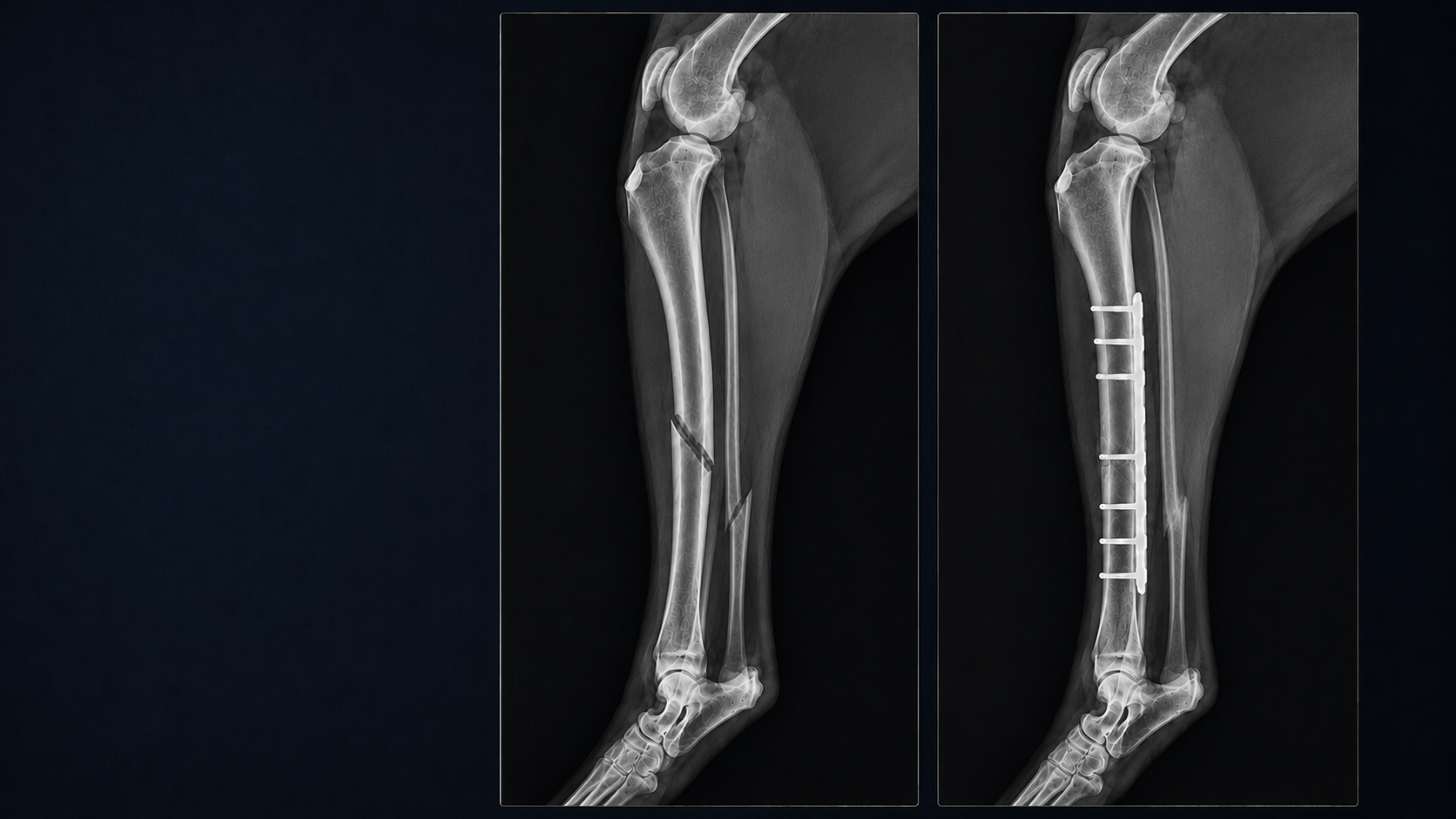
Fractures and luxations are assessed according to location, pattern, exposure, soft tissues, stability, age, size and expected function. Appropriate orthogonal radiographs help define injury geometry and reconstruction planning.
Reconstruction and healing
When surgery is indicated, the objective is to restore alignment, stability and a biological environment that supports healing. Radiographic and functional follow-up guide activity restriction and progression toward safe return to function.
References
Scientific and institutional reading
Reference sources for further reading. This page is educational and does not replace an individual clinical assessment.