Clinical knowledge · knee

TPLO

An editorial introduction to the knee, instability associated with cranial cruciate ligament rupture and the reasoning that precedes planning.

Canine knee and biomechanics for TPLO

What happens in the knee

Knee stability depends on the interaction between bone structures, soft tissues, muscles and the forces present during weight-bearing. Understanding the individual case comes before any treatment decision.

The concept of TPLO

Cranial cruciate ligament rupture changes knee mechanics during weight-bearing. TPLO changes the biomechanical relationship between the tibial plateau and the forces acting across the joint, aiming to reduce cranial tibial translation during stance. Indication depends on the clinical examination, imaging and the individual patient.

Planning and recovery

Indication, surgical planning, postoperative management and reassessments belong to the same process. Timelines and recommendations must be defined for the patient being examined.

References

Scientific and institutional reading

Reference sources for further reading. This page is educational and does not replace an individual clinical assessment.

Interactive anatomy

Explore canine knee landmarks.

Hover over the points; on mobile, tap to identify the structures. This educational representation does not replace clinical or radiographic planning.
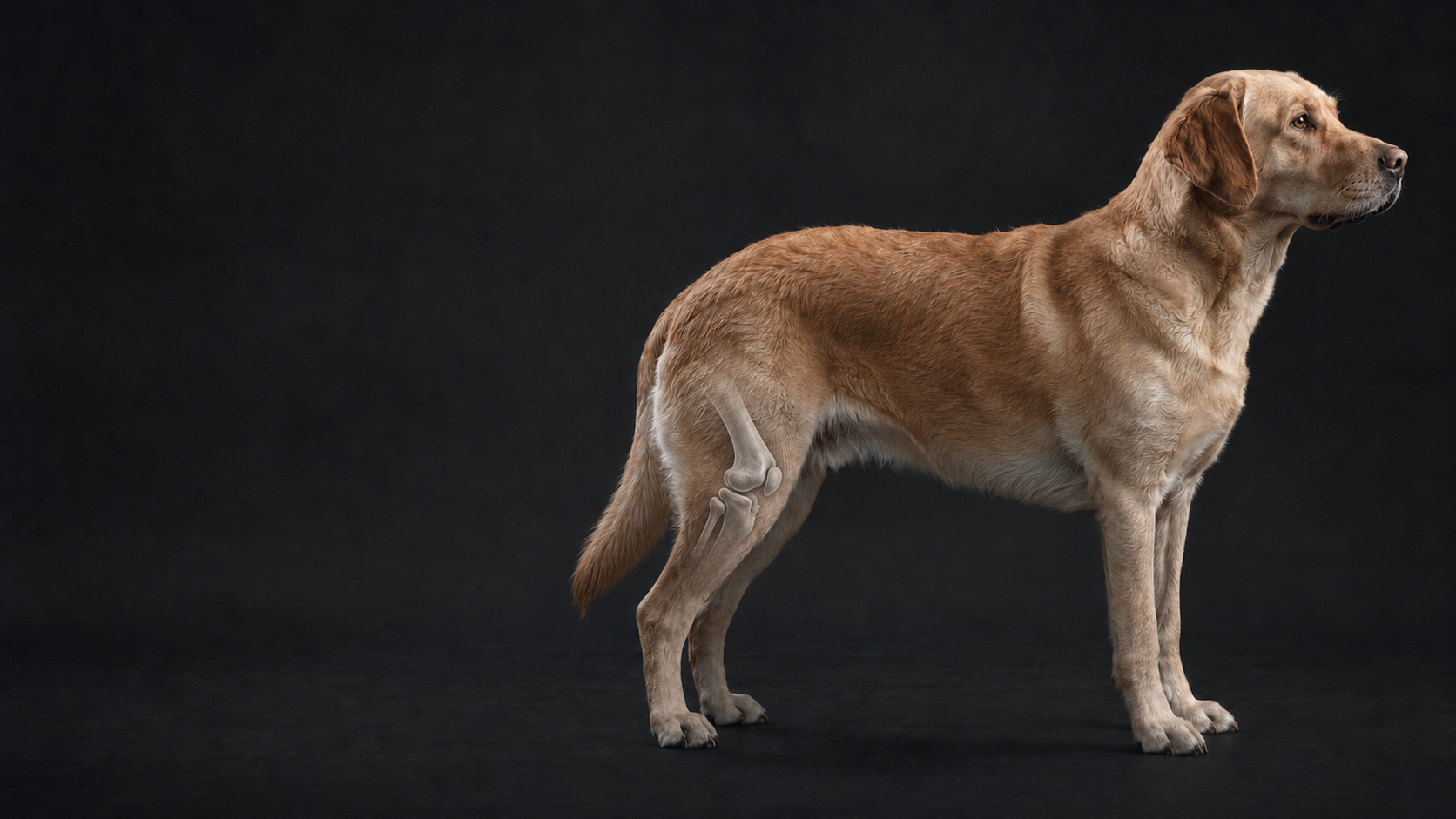
Dog with anatomical representation of the knee
Veterinary medical informationInterpretation, diagnostic testing and management depend on the individual patient.

Continuity of care

Frequent questions

Quick guidance for common recovery-care questions.

Does my pet need a surgical recovery suit?

It depends on the procedure, incision location and patient behavior. When indicated, the garment should stay clean, dry and properly fitted without compressing the wound. If the animal can still lick or bite the area, protection needs to be reassessed.

Does a recovery suit replace an Elizabethan collar?

Not always. The goal is to prevent access to the incision. In some locations or patients, a suit does not prevent licking or chewing, and a collar may still be necessary. Follow the protection recommended for that procedure.

How should I monitor the surgical wound?

Observe it without unnecessary handling. Increasing redness, swelling, discharge, foul odor, wound opening, bleeding or progressively increasing pain are reasons to contact the team. Serial photos can help when requested.

Can the incision get wet or can my pet have a bath?

Do not wet the surgical area or bathe your pet until specific clearance is given. Moisture can affect dressings, increase contamination risk and make wound assessment harder. If it gets wet accidentally, contact the team.

What should I do if I miss a medication dose?

Do not double the next dose on your own. The correct action depends on the medication, interval and how late the dose is. Check the patient instructions or contact the team before compensating for a missed dose.

Can I change the dose, schedule or stop a medication?

Not without veterinary guidance. Dose, interval and duration are part of the prescription. Do not add human medicines, anti-inflammatory drugs or supplements without confirmation because interactions or contraindications may exist.